|
HINDUSTANI.
"I.--GEOGRAPHICAL EXTENT AND STATISTICS.
[...]
II.--CHARACTERISTICS OF THE LANGUAGE.
[...]
III.--ALPHABETICAL SYSTEM.
[...]
IV.--VERSIONS OF THE SCRIPTURES IN THIS LANGUAGE.
The first translation of any portion of Scripture into
Hindustani seems to have been made by
Schultze, a Danish my. Although fully occupied in the cultivation of
Tamil and
Telinga,
dialects of Southern India, the scene of his labours, this indefatigable man
undertook the translation of
the New Testament into Hindustani in 1739, and completed it in 1741.
He likewise entered upon
the translation of the Old Testament, but only lived to finish the first four
chapters of Genesis, the
book of Psalms, the prophecies of Daniel, and some
parts of the Apocryphal writings. These various
translations were published at the Oriental Institution of the University at
Halle, in separate portions:
the chapters of Genesis, the book of Daniel, and portions of the Apocrypha, in 1745; the Psalter in
1747, and the New Testament in 1748 to 1758. Copies were at various
times transmitted to India,
but the hopes and expectations of the zealous translator were never realised,
for the translation proved
to be by no means a happy one; and the Psalms, in particular, were found so
defective in idiom and
orthography as to be nearly unintelligible. No other version of the
Scriptures, however, was prepared
for the benefit of the Muss_lm_ns of India till the
year 1804, when the Gospels, which had been trans-
lated by natives, and revised and collated with the
Greek by William
Hunter, Esq., were published at
the College of Fort William in Calcutta.
But the most important translation that has
been ever made into this language is the version of
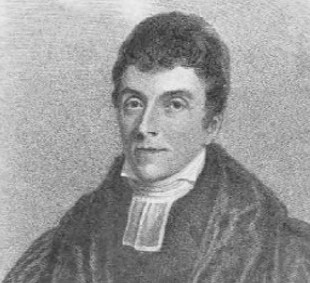
the New Testament by the Rev. Henry Martyn, for which, as his biographer
remarks, "myriads in
the ages to come will gratefully remember and revere his name." Mr. Martyn
entered upon the work
of translation shortly after his arrival in India, and commenced with the
Acts. In 1807 he was joined
by Mirza Fitrut, a learned Hindustani scholar,
whose services were found invaluable on account of his
surprising acquaintance with the English language. Sabat was also
consulted respecting the use of
Persian and Arabic words, but his evil temper greatly detracted from his
usefulness. By means of the
most indefatigable exertions, the translation of the entire Testament was
completed in 1808. Mr.
Martyn remarked, that it often cost him and his coadjutors whole days to make
one chapter intelligible
in Hindustani. Of the feelings and personal experience of the
translator during the progress of this
work, we have happily the means of judging. In a letter addressed to
the Associated Clergy, and
dated January 1808, Mr. Martyn expresses himself in the following terms:--
"If the work should fail,
which however I am far from expecting, my labour will have been richly repaid
by the profit and
pleasure derived from considering the word of God in the original with more
attention than I had ever
done. Often have I been filled with admiration, after some hours’
detention about one or two verses,
at the beauty and wisdom of God’s words and works; and often rejoiced at
meeting a difficult passage,
in order to have the pleasure of seeing some new truth emerge. It has
been frequently a matter of
delight to me that we shall never be separated from the contemplation of these
divine oracles, or the
wondrous things about which they are written. Knowledge shall vanish
away, but it shall be only
because the perfection of it shall come." The philological
difficulties, which Mr. Martyn had to
encounter in the prosecution of his work, were by no means few or
inconsiderable. No prose com-
positions of acknowledged purity at that period existed in Hindustani, so
that he had no model upon
which to form his style, and no recognised standard of appeal. The
higher Moh_mm_dans and men
of learning were then, as they still are, disdainful of all works in which
the Persian had not lent its aid
to adorn the style; while to the illiterate classes a large proportion of
Hindustani has always been more
acceptable. To meet the conflicting views of these two parties has
ever been found a task of no ordinary
difficulty; and hence, notwithstanding the labour expended on his version of
the New Testament,
Mr. Martyn addressed himself, immediately on its completion, to a diligent
and careful revision. The
publication of the work was farther delayed by the fire which occurred at
Serampore at the time that
it was passing through the press. The printing had advanced to the
eighteenth chapter of the Gospel
of St. Matthew, of which the first thirteen chapters were preserved; and as
there was then a general
demand for the Hindustani Scriptures, the Calcutta Committee ordered the
completion of St. Matthew
at one of the presses in Calcutta. The fount of Persian types which
had been used in printing was
completely destroyed; but new and handsomer types were prepared in the course
of a few months, and
the work was a second time put to press at Serampore. At length, in
the year 1814, this invaluable
version appeared, in an edition of 2000 copies of the Testament on English
paper; beside 3000 copies
of the Gospels and Acts on Patna paper, which were printed off for immediate
use. The whole was
printed at the expense of the British and Foreign Bible Society, by their
Corresponding Committee
in Calcutta.
The high reputation which this version speedily obtained, and
the success with which it was used
in native schools at Agra and other places, led to a demand for an edition in
the Devanagari character,
for the benefit of the Hindoos in the upper provinces, who universally read
and write in this char-
acter. The Calcutta Committee yielded to the wishes of these people by
furnishing them, in 1817,
with an edition of 2000 copies of Martyn’s Testament, printed in the
Devanagari character. No sub-
sequent editions of the Hindustani Scriptures were, however, issued in this
dress , for it was found by
experience that the Scriptures in the Hinduwee dialect are far more
acceptable than in the Hindustani
to the numerous class of natives who employ the Devanagari characters.
For their use, as we shall
hereafter have occasion to mention, Martyn’s New Testament
was eventually divested of its Persian and
Arabic terms, and transferred into the
Hinduwee idiom by Mr.
Bowley. An edition of the Gospel of
St. Matthew in Hindustani and English
was published by the Calcutta Committee in 1820, and was
found to be very acceptable to natives who were desirous of acquiring the
knowledge of the English
language.
While these editions were being issued by the Calcutta
Auxiliary, the publication of an edition
in London had been contemplated by the Parent Society since the year 1815:
the design was not
carried into execution till 1819, when an impression of 5000 copies was
struck off with some Persian
types, lent for the purpose by the Church My. Society. This edition
was published under the
able superintendence of the Rev. Professor Lee. Four thousand
of the copies were forwarded to
Calcutta, where they arrived most opportunely, and just at the period when
the Calcutta Committee
were projecting the publication of another edition, on account of the almost
entire exhaustion of the
copies of previous editions. The urgent necessity for fresh supplies
of the New Testament having
been thus met, the Calcutta Committee turned their
attention to the publication of a Hindustani
version of the Old Testament, which had been for some time contemplated.
The preparation of this
version had been almost completed prior to the decease of Mr. Martyn, by
Mirza Fitrut, who had, on
his first engagement as an assistant to Mr. Martyn, promised to learn the
Hebrew language in order to
qualify himself for translating the Old Testament from the original text.
A copy of the book of
Genesis belonging to this version had passed into the hands of the Church
My. Society; they
lent it in 1817 for publication to the British and Foreign Bible Society, and
it was printed in London
under the care of Dr. Lee. The Calcutta Society had, since the year
1816, been in possession of a
rough draft of the entire version, and in 1819 their committee resolved to
have it revised and com-
pleted; the Rev. Messrs. Thomason and Corrie, with the aid of suitable native
assistants, charged
themselves with the execution. The first portion of the work published
was an edition of 2000 copies
of the Pentateuch, which appeared in 1823, and was in great request among
the Moh_mm_dans.
The peculiar difficulties which impeded the progress of the learned men
engaged in the preparation
and revision of this version are thus described by the committee:--"It will be readily perceived by
those who understand the language, that it is far from being easy to invest
the Scriptures with an Urdu
dress. Such an attempt is, perhaps, more difficult in this than in any
other language, because of its
being so generally and familiarly spoken. The habit of using certain
words and phrases in the inter-
course of common life, with the lowest domestics, on the most trivial
occasions, attaches to them a sort
of grovelling character, which in many instances does not really belong to
them. It is not easy in
such circumstances to separate the base from the pure metal, to distinguish
what is precious in the
currency from what is vile. It should also be considered, that where
there is a great paucity of
standard works on subjects peculiarly sacred, or rather no such work at all,
many terms must be
borrowed from sister dialects, many new words introduced, and phrases invented
in describing things
unknown, which must of necessity give an air of uncouthness to the style,
with whatever care the
labour be conducted." On the completion of the Pentateuch, the editors found
it desirable to delay
the publication of the succeeding books, in order that the MS. might first be
subjected to a more
thorough revision and collation with the original Hebrew. In the
meantime, however, that the press
might not remain unemployed, they passed on to the printing of another edition
of the New Testa-
ment. The proofs of the Gospels were revised by the Rev. Principal
Mill; but in 1824, when the
work had advanced as far as the Acts of the Apostles, its superintendence
appears to have devolved on
other gentlemen, probably from the pressing nature of his college duties and
avocations. The revision
was carried on to the 2nd Corinthians by the lamented Mr. Thomason, and
afterwards by Mr. Da Costa
to the close, under the superintendence of the venerable Archdeacon Corrie.
The edition, consisting
of 2000 copies, left the press in 1830. The following year another
edition of the New Testament,
consisting of 2000 copies, was commenced at Serampore, under the
superintendence of Archdeacon
Corrie: it was completed in 1834.
During the publication of these two editions of the New
Testament, the revision of the Old
Testament version was gradually proceeding. It continued to advance in
regular order from the
Pentateuch to the end of the 2nd book of Kings, when it was brought to a
stand, on account of the
ill health of Mr. Thomason, and his consequent removal to Europe. His
anxiety to complete a version
which he considered of the first importance, and which he was most peculiarly
qualified to execute,
induced him to return to India, but his valuable life was shortly afterwards
terminated. After the
decease of Mr. Thomason, this version was carried forward by the mies. at
Benares; and the
Committee of the British and Foreign Bible Society made a grant of
£1000 to the London My.
Society, for time and services rendered by their mies. in prosecuting the
work. In 1844 the
committee announced that the Old Testament was at length completed; and that
editions, both in
Arabic and Roman characters, were in course of distribution. It was
brought to its conclusion and
revised by Messrs. Shurman and Kennedy of Benares, assisted by the Rev. J.
Wilson of All_habad,
and J. A. F. Hawkins, Esq.
In 1839 the Calcutta Committee published 2000 copies of the New
Testament in Roman characters,
and 1000 copies of Anglo-Hindustani, in the same characters; the English and
Hindustani texts
arranged in opposite columns on the same page. Several mies. had
expressed a desire for such
a version, as one adapted to the wants of native Christians, drummers, etc.
acquainted with the
English letters.
In addition to their labours in the revision of the Old
Testament, the mies. at Benares
were, in 1838, preparing for the Calcutta Committee a new or revised version
of the Gospels and
Acts, to be printed in Persian characters. In 1842 the Calcutta
Committee announced the completion
of a thorough revision of the entire New Testament, for which they
acknowledged their obligation to
the joint labours of the mies. of the London and Church My. Societies, who
had
for five years devoted all their spare time to this important work.
During the same year, the Com-
mittee of the British and Foreign Bible Society, on the application of the
Directors of the London
My. Society, paid the expenses of printing, in London, 5000 copies of the
Hindustani New
Testament, prepared by Mr. Buyers and other mies. at Benares. This
edition was printed in
Roman characters. When the edition of the Old Testament in Roman
characters was passing through
the press, this version was selected by the Calcutta Committee to accompany
it, as it was deemed
desirable to have the Old and New Testaments in a uniform translation.
An edition of 1500 copies
of the New Testament was therefore determined upon; but the work was
previously revised by the
Rev. Mr. Shurman in communication with Mr. Hawkins; and in
the course of the revision, Mr. Shur-
man saw reason to revert, in a great measure, to the translation of Henry
Martyn, especially in the
latter half of the version. The edition had left the press in
1844. Mr. Shurman was subsequently
engaged, at Benares, in the revision of the Old Testament translation, when
(in 1852) death interrupted
his valuable labours.
It appears, therefore, that besides the
version by the Rev. Henry Martyn, there are now three
different versions of the Hindustani New Testament in existence; namely, the
version of a committee
at Benares, the version of Mr. Buyers above noticed, and a version prepared by
the Baptist mies.
of Calcutta in 1841. Some little progress has recently been made in
printing the latter in Roman
characters; and it appears to have advanced as far as the Gospel of St. Luke.
Among these new trans-
lations, the idiomatic and faithful version of Henry Martyn
still maintains its ground, although from
the lofty elegance of its style it is better understood by educated than by
illiterate Moh_mm_dans.
The Hindustani version of the Scriptures has undergone
subsequent revision at the hands of a
committee appointed for the purpose, and later editions, both of the Old and
New Testament, have
appeared. Some of these have been printed in the Arabic, and others in
the Roman character. An
edition of the New Testament in Urdu (Arabic character), after several years
of anxious labour on the
part of the reviser, Mr. Hoernle, was approaching towards completion, when the
mutiny of 1857 inter-
rupted the operations of the Bible Society, and involved in destruction the
whole of their premises, with
the stock of books, paper, presses, etc., at Secundra, near Agra, where the
work was in progress. It was
determined, in the place of that which had been thus destroyed, to print
immediately a large edition in
London, and this has happily been accomplished. From the British and
Foreign Bible Society’s
Report for the present year (1860), we learn that 20,000 New Testaments, and
30,000 single Gospels
and Acts, in Urdu, Arabic character, have just left the press. The
greater portion have already been
forwarded to All_habad. Ten thousand copies of the Urdu New Testament,
in Roman characters, and
the same number with English in parallel columns, have also been carried
through the press."--1860 S. Bagster [Info only]
|